Suppression of ADP-ribosylation reversal triggers cell vulnerability to alkylating agents
Questo studio indaga come la soppressione della inversione ADP-ribosilazione migliori la vulnerabilità delle cellule tumorali agli agenti alchilanti.

Approfondimenti e novità sulla biochimica, dalle interazioni molecolari ai processi biologici, con focus su ricerca scientifica, biologia molecolare, diagnostica e innovazione nel settore biomedico.
Questo studio indaga come la soppressione della inversione ADP-ribosilazione migliori la vulnerabilità delle cellule tumorali agli agenti alchilanti.
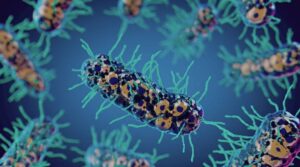
Antibiotic resistant "superbugs" represent a major public health concern of the last 21th century, with an expected number of ten million deaths per year by 2050. Antimicrobial resistance occurs in a wide range of infectious diseases and it is promoted by the activation…
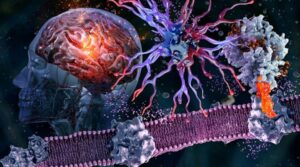
Abstract The chemical modification of cellular macromolecules by the transfer of ADP-ribose unit(s), known as ADP-ribosylation, is an ancient homeostatic and stress response control system. Highly conserved across the evolution, ADP-ribosyltransferases and ADP-ribosylhydrolases control ADP-ribosylation signalling and cellular responses. In addition to proteins,…

Dimostriamo un ruolo positivo del digiuno come meccanismo protettivo contro lo stress ossidativo nel muscolo scheletrico.
In questo studio analizziamo il meccanismo molecolare coinvolto nell'espressione selettiva dell'isoforma CAV1β, indotta dagli estrogeni e sottoregolata nel carcinoma mammario.

La ricerca clinica attuale cerca di chiarire se molecole naturali riconosciute possano prevenire o migliorare condizioni degenerative.
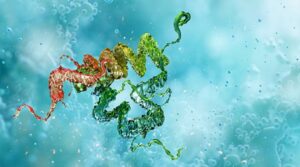
Abstract Heme oxygenase 1 (HO-1) is crucially involved in cell adaptation to oxidative stress and has been demonstrated to play an important role in cancer progression and resistance to therapies. We recently highlighted that undifferentiated neuroblastoma (NB) cells are prone to counteract oxidative…

In questo studio abbiamo valutato il ruolo dei meccanismi molecolari dell’induzione dell’HO-1 nella risposta delle cellule NB allo stress ossidativo, analizzando il suo principale attivatore, Nrf2, e il suo principale repressore, Bach1.
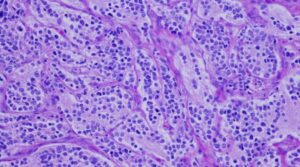
Le cellule di neuroblastoma (NB) sono in grado di contrastare lo stress ossidativo (OS) attraverso l'attivazione di meccanismi di difesa antiossidante, tra cui il sistema Nrf2/HO-1 svolge un ruolo cruciale.
Abbiamo esplorato l'impatto di miR-128 nell'espressione di geni correlati alla risposta allo stress. MAFG è il nuovo bersaglio del miR-128.
