Visit our Scientific Research Area: a section dedicated to professionals in the field, where you can find official resources—official documents, publications, and advanced research—on the scientific research topics of the synbrAIn team.
Abstract MAFG (v-Maf avian musculoaponeurotic fibrosarcoma oncogene homolog G) is a bZIP-type transcriptional regulator that belongs to the small MAF (sMAFs) protein family. By interacting with other bZIP transcription factors, sMAFs can form homo- and heterodimers governing either repressive or activating transcriptional functions.…
Current clinical research aims to determine whether known natural compounds can prevent or improve degenerative conditions.
In the last decades, we have witnessed a growing interest toward touchless gestural user interfaces. Among other reasons, this is due to the large availability of different low-cost gesture acquisition hardware (the so-called “Kinect-like devices”).
Gesture recognition is an emerging cross-discipline research field, which aims at interpreting human gestures and associating them to a well-defined meaning.
In the last twenty years, robotics have been applied in many heterogeneous contexts. Among them, the use of humanoid robots during musical concerts have been proposed and investigated by many authors.
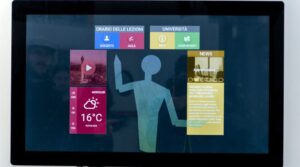
In recent years, touchless-enabling technologies have been more and more adopted for providing public displays with gestural interactivity.
It is well known from prior work, that people interacting as well as attending to a public display attract further people to interact. This behavior is commonly referred to as the honeypot effect.
Public displays have been used as a persuasive technology in many prior works.
In the last few years, the use of gestural data has become a key enabler for human-computer interaction (HCI) applications.
Twenty-five years past the Weiser’s vision of Ubiquitous Computing, and there is not a clear understanding of what is or is not a pervasive system.